

Hey there! As a supplier of low voltage servo motors, I often get asked if these motors can be used in industrial automation. Well, let's dive right into it and find out.
First off, what exactly are low voltage servo motors? These motors typically operate at voltages lower than the standard industrial voltage, usually in the range of 12V to 48V. They're known for their compact size, high efficiency, and precise control, which makes them a popular choice for a variety of applications.
Now, let's talk about industrial automation. This field involves the use of control systems, such as computers or robots, to operate and control industrial processes. The goal is to increase efficiency, reduce human error, and improve product quality. So, can low voltage servo motors fit into this picture?
The answer is a resounding yes! Low voltage servo motors have several advantages that make them well - suited for industrial automation.
One of the biggest advantages is their safety. Since they operate at lower voltages, the risk of electrical shock is significantly reduced. This is especially important in industrial settings where workers may come into contact with the equipment. For example, in a small - scale assembly line where workers are handling parts, a low voltage servo motor is a much safer option compared to a high - voltage motor.
Another advantage is their energy efficiency. Low voltage servo motors consume less power compared to their high - voltage counterparts. This not only helps in reducing the overall energy costs but also makes them more environmentally friendly. In today's world, where energy conservation is a top priority, this is a huge plus for industrial automation.
Precision control is also a key feature of low voltage servo motors. In industrial automation, accurate positioning and speed control are crucial. These motors can provide precise control over the movement of machinery, ensuring that products are manufactured to the exact specifications. For instance, in a 3D printing machine used in industrial production, a low voltage servo motor can control the movement of the print head with high precision, resulting in high - quality prints.
Compact size is yet another benefit. In many industrial automation applications, space is limited. Low voltage servo motors are often smaller and lighter than high - voltage motors, which makes them easier to install in tight spaces. This is particularly useful in applications like pick - and - place robots, where a compact motor can be integrated into the robot's arm without taking up too much space.
Let's take a look at some specific applications in industrial automation where low voltage servo motors can be used.
In conveyor systems, low voltage servo motors can be used to control the speed and movement of the conveyor belts. This allows for precise control over the flow of materials, ensuring that products are transported at the right speed and in the right direction. For example, in a food processing plant, a low voltage servo motor can be used to control the conveyor belt that moves food products through the packaging process.
Robotics is another area where low voltage servo motors shine. In industrial robots, these motors can be used to control the movement of the robot's joints. This enables the robot to perform complex tasks with high precision, such as welding, painting, or assembly. For instance, a small - scale industrial robot used for circuit board assembly can use low voltage servo motors to accurately place components on the board.
Packaging machines also benefit from low voltage servo motors. These motors can be used to control the movement of the packaging materials, such as wrapping paper or boxes. This ensures that the products are packaged neatly and efficiently. For example, in a pharmaceutical packaging machine, a low voltage servo motor can be used to control the movement of the blister packs, ensuring that the pills are correctly placed and sealed.
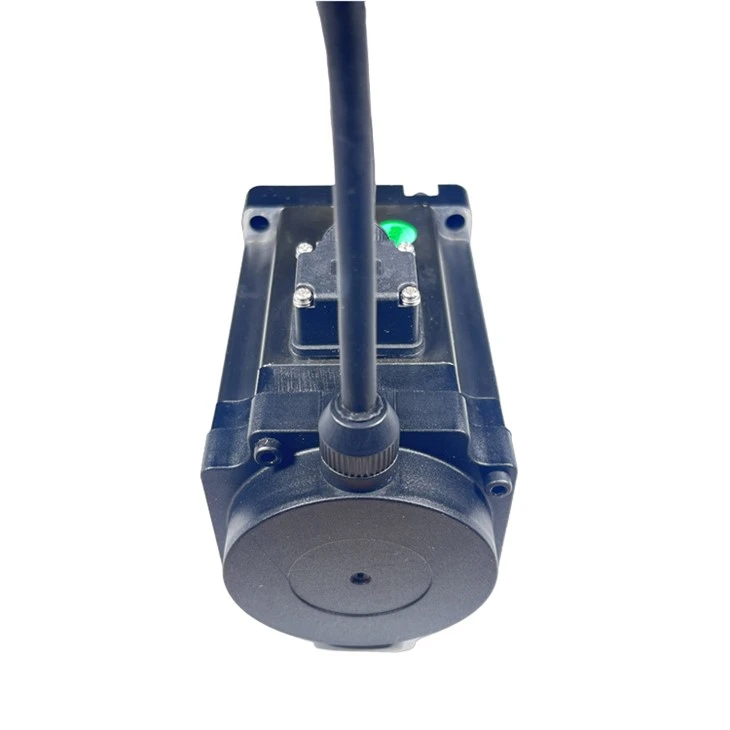
Now, let's talk about some of the products we offer. We have a range of low voltage servo motors, including the 24v 50w DC Motor and the 24v 400w DC Motor. These motors are designed to provide high - performance and reliable operation in industrial automation applications. Our 24 Volt Servo Motor is also a popular choice, offering precise control and energy efficiency.
Of course, like any technology, low voltage servo motors also have some limitations. One of the main limitations is their power output. Since they operate at lower voltages, they may not be suitable for applications that require high power. For example, in heavy - duty industrial machinery like large - scale presses or crushers, high - voltage motors may be more appropriate.
Another limitation is their torque. Low voltage servo motors may have lower torque compared to high - voltage motors. This can be a problem in applications where high torque is required, such as in some types of lifting equipment.
However, for many industrial automation applications, these limitations can be overcome. By carefully selecting the right motor for the specific application and using appropriate control systems, low voltage servo motors can still provide excellent performance.
In conclusion, low voltage servo motors can definitely be used in industrial automation. Their safety, energy efficiency, precision control, and compact size make them a great choice for a wide range of applications. Whether it's in conveyor systems, robotics, or packaging machines, these motors can help improve the efficiency and quality of industrial processes.
If you're interested in using low voltage servo motors in your industrial automation projects, I'd love to have a chat with you. We can discuss your specific requirements and find the best motor solutions for your needs. Don't hesitate to reach out and start the conversation about procurement.
References

- "Servo Motors and Drives: Basics, Selection, and Application" by Peter Nachtwey
- "Industrial Automation: Theory and Practice" by John Doe