

Hey there! As an AC servo motor supplier, I often get asked about the dynamic performance of these motors. So, I thought I'd break it down for you in this blog post.
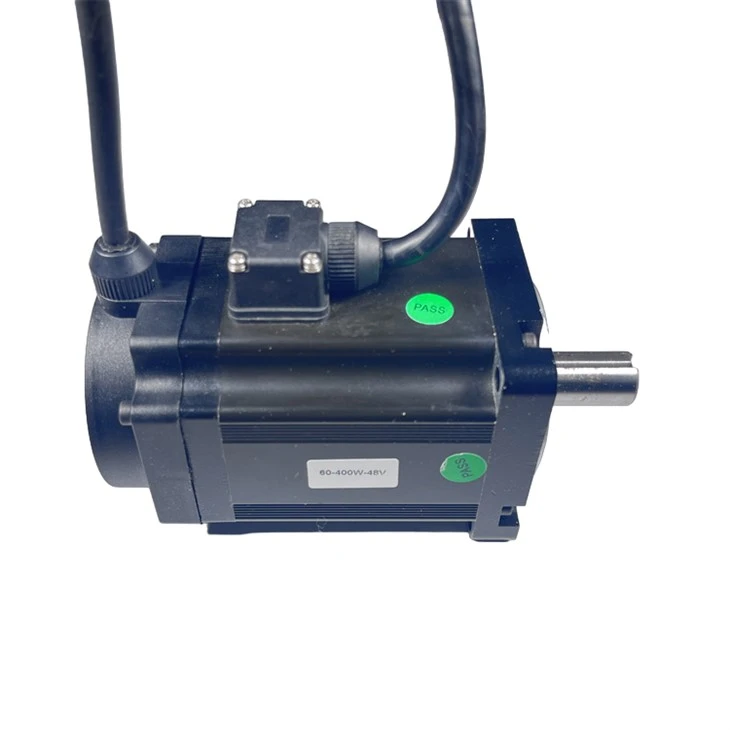

Let's start with the basics. An AC servo motor is a type of electric motor that uses alternating current (AC) to control its speed and position accurately. It's commonly used in industrial automation, robotics, and CNC machines, where precise control is essential.
The dynamic performance of an AC servo motor refers to how well it can respond to changes in speed, torque, and position. It's all about how quickly and smoothly the motor can adjust to different operating conditions. There are several key factors that affect the dynamic performance of an AC servo motor, and I'll go through them one by one.
1. Torque Response
Torque is the rotational force that the motor generates. In dynamic situations, the ability of the motor to quickly change its torque output is crucial. A high - torque response means that the motor can rapidly increase or decrease its torque as needed. For example, when a robot arm needs to pick up a heavy object suddenly, the servo motor has to be able to boost its torque output right away.
Our Motor 200w 220v has an excellent torque response. It can adjust its torque in a matter of milliseconds, which is great for applications where quick changes in load are common. This allows for smooth and efficient operation, reducing the wear and tear on the motor and other mechanical components.
2. Speed Response
The speed response of an AC servo motor is about how fast it can change its rotational speed. In many industrial applications, the motor may need to speed up or slow down rapidly. For instance, in a packaging machine, the motor might need to accelerate quickly to feed the next package and then decelerate smoothly to stop at the right position.
Our AC Servo Motor 200w is designed with a very fast speed response. It can reach its maximum speed from a stand - still in a short time and also slow down just as quickly. This fast speed response ensures high - productivity in applications where rapid speed changes are required.
3. Positioning Accuracy
Positioning accuracy is another vital aspect of dynamic performance. In precision manufacturing, such as in the production of microelectronics, the motor has to be able to position a component with extreme accuracy. Even a small error in positioning can lead to defective products.
AC servo motors are known for their high positioning accuracy. Our AC Servo Motor 750w uses advanced control algorithms and high - resolution encoders to achieve extremely precise positioning. It can hold a specific position within a very small tolerance, which is essential for high - quality manufacturing processes.
4. Overload Capacity
In real - world applications, motors may encounter temporary overloads. For example, a conveyor belt might get jammed, causing the motor to experience a sudden increase in load. The overload capacity of an AC servo motor determines how well it can handle these situations without failing.
Our motors are designed with a high overload capacity. They can handle short - term overloads without overheating or losing performance. This means that in case of an unexpected increase in load, the motor will continue to operate until the issue is resolved, reducing downtime in industrial processes.
5. Damping
Damping is related to how well the motor can suppress vibrations and oscillations. When a motor changes its speed or torque suddenly, it can create vibrations. Excessive vibrations can not only reduce the accuracy of the motor's operation but also cause noise and damage to the surrounding equipment.
Our AC servo motors have excellent damping characteristics. They are designed to minimize vibrations, ensuring smooth and quiet operation. This is especially important in applications where noise reduction is a priority, such as in medical equipment or laboratory settings.
How to Optimize Dynamic Performance
There are a few things you can do to optimize the dynamic performance of an AC servo motor. First, proper tuning of the motor's control parameters is essential. This involves adjusting settings such as the gain, integral time, and derivative time to match the specific requirements of the application.
Second, regular maintenance is crucial. Keeping the motor clean, checking the lubrication, and inspecting the electrical connections can prevent issues that could affect the dynamic performance. For example, a dirty encoder can lead to inaccurate position feedback, which in turn can reduce the motor's accuracy.
Finally, choosing the right motor for the job is vital. Make sure to consider factors such as the required torque, speed, and positioning accuracy when selecting an AC servo motor. Our team of experts can help you make the right choice based on your specific application.
In conclusion, the dynamic performance of an AC servo motor is a combination of several factors, including torque response, speed response, positioning accuracy, overload capacity, and damping. Our range of AC servo motors, such as the Motor 200w 220v, AC Servo Motor 200w, and AC Servo Motor 750w, are designed to offer excellent dynamic performance for a wide range of applications.
If you're looking for high - quality AC servo motors with outstanding dynamic performance, we'd love to hear from you. Whether you're in the industrial automation, robotics, or any other field that requires precise motor control, we can provide you with the right solution. Contact us to start a procurement discussion and find out how our motors can improve your processes.
References
- "Servo Motors and Motion Control" by Frederick G. Kelly
- "Industrial Automation Handbook" by Peter Nachtwey