

In the world of industrial automation, servo motors play a pivotal role. As a dedicated supplier of Servo Motor Parts, I've witnessed firsthand the importance of various technical aspects, and one key concept that often comes up in discussions with clients is the power factor of servo motor parts. Understanding this factor is crucial for optimizing performance, reducing energy consumption, and ensuring the longevity of the equipment.
What is Power Factor?
Before delving into the power factor of servo motor parts, it's essential to grasp the basic concept of power factor. In an AC electrical circuit, power factor (PF) is defined as the ratio of real power (P), which is the power that performs useful work, to apparent power (S). Apparent power is the product of the voltage (V) and current (I) in the circuit. Mathematically, it can be expressed as:
PF = P / S
The power factor ranges from 0 to 1. A power factor of 1 indicates that all the electrical power supplied to the circuit is being used for useful work, with no reactive power. Reactive power (Q) is the power that oscillates between the source and the load and does not perform any useful work. It is associated with the inductive or capacitive elements in the circuit. When the power factor is less than 1, it means that there is some reactive power in the circuit, which leads to inefficiencies and increased energy consumption.
Power Factor in Servo Motors
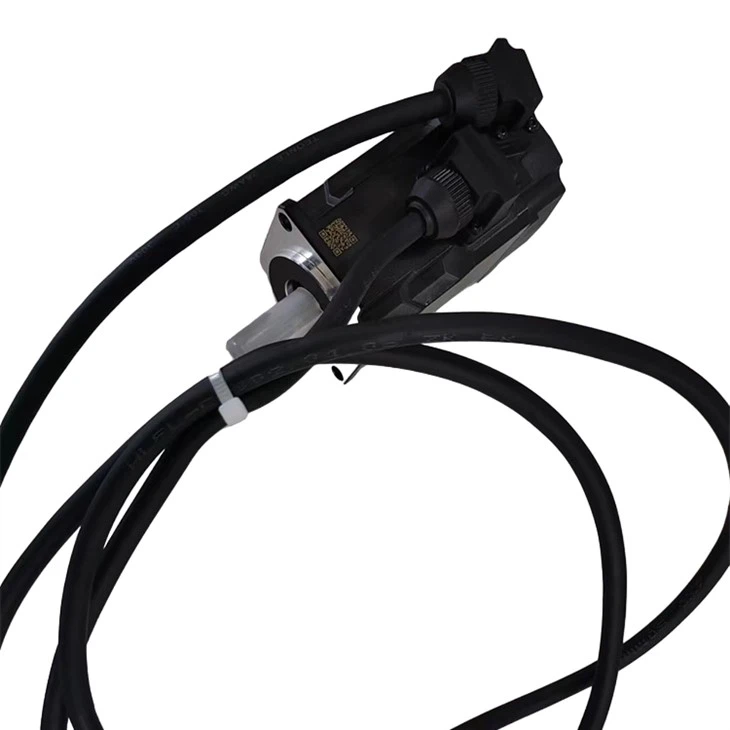
Servo motors are complex electromechanical devices that consist of various parts, including the motor itself, power cables, plugs, and encoder cables. Each of these parts can have an impact on the overall power factor of the servo motor system.
Servo Motor
The servo motor is the heart of the system. It converts electrical energy into mechanical energy to drive the load. The power factor of a servo motor is influenced by its design and operating conditions. Most servo motors have a power factor in the range of 0.7 to 0.9. This is because servo motors typically have inductive windings, which cause a phase difference between the voltage and current, resulting in reactive power.
The power factor of a servo motor can also vary depending on the load. When the motor is operating at full load, the power factor is usually higher than when it is operating at a light load. This is because at full load, the motor is more efficient, and there is less reactive power.
Servo Motor Power Cable
The power cable is responsible for transmitting electrical power from the power source to the servo motor. It can also affect the power factor of the system. The resistance and inductance of the power cable can cause voltage drops and phase shifts, which can reduce the power factor.
Longer power cables have higher resistance and inductance, which can lead to a lower power factor. Additionally, if the cable is not properly sized for the current requirements of the servo motor, it can also cause inefficiencies. Therefore, it is important to choose the right power cable with the appropriate cross-sectional area and length to minimize the impact on the power factor.
Servo Motor Plug
The servo motor plug is the interface between the power cable and the servo motor. It may seem like a simple component, but it can also have an impact on the power factor. A loose or damaged plug can cause poor electrical contact, which can lead to increased resistance and voltage drops. This can result in a lower power factor and reduced efficiency.
To ensure a high power factor, it is important to use high-quality plugs that are properly installed and maintained. Regular inspections and replacements of the plugs can help prevent issues that may affect the power factor.
Servo Motor Encoder Cable
The encoder cable is used to transmit feedback signals from the encoder to the servo drive. While the encoder cable does not directly carry the main power to the motor, it can still have an indirect impact on the power factor. A faulty encoder cable can cause inaccurate feedback signals, which can lead to the servo drive adjusting the motor's operation in an inefficient way.
For example, if the encoder cable has a high resistance or is damaged, the servo drive may not receive the correct position or speed information. This can cause the motor to overcompensate, resulting in increased energy consumption and a lower power factor. Therefore, it is important to use high-quality encoder cables and ensure that they are properly installed and maintained.

Importance of Power Factor in Servo Motor Systems
Understanding and optimizing the power factor of servo motor parts is crucial for several reasons:
Energy Efficiency
A high power factor means that the servo motor system is using electrical power more efficiently. This results in lower energy consumption and reduced electricity bills. In industrial applications where servo motors are used extensively, even a small improvement in the power factor can lead to significant cost savings over time.
Reduced Equipment Stress
When the power factor is low, there is more reactive power in the circuit, which can cause additional stress on the electrical equipment. This can lead to increased heat generation, reduced lifespan of the components, and higher maintenance costs. By improving the power factor, the stress on the equipment is reduced, which can extend its lifespan and reduce the likelihood of breakdowns.
Compliance with Regulations
In some regions, there are regulations regarding the power factor of electrical equipment. Industrial facilities may be required to maintain a certain power factor to avoid penalties. By ensuring that the servo motor system has a high power factor, companies can comply with these regulations and avoid any potential fines.
Improving the Power Factor of Servo Motor Parts
There are several ways to improve the power factor of servo motor parts:
Power Factor Correction Capacitors
Power factor correction capacitors can be installed in parallel with the servo motor to compensate for the reactive power. These capacitors provide a leading current that counteracts the lagging current caused by the inductive elements in the motor. By adding the appropriate capacitance, the power factor can be increased closer to 1.
Proper Sizing of Components
As mentioned earlier, using the right size of power cables, plugs, and encoder cables is essential for maintaining a high power factor. Choosing cables with the appropriate cross-sectional area and length can minimize the resistance and inductance, which can improve the power factor. Additionally, using high-quality components that are properly installed and maintained can also help ensure a high power factor.
Load Management
Proper load management can also have an impact on the power factor. Operating the servo motor at or near its rated load can help improve the power factor. Avoiding overloading or underloading the motor can reduce the reactive power and increase the efficiency of the system.
Conclusion
The power factor of servo motor parts is an important aspect of servo motor systems. It affects the energy efficiency, equipment lifespan, and compliance with regulations. As a supplier of Servo Motor Parts, I understand the significance of providing high-quality components that contribute to a high power factor. By choosing the right servo motor parts, implementing power factor correction measures, and practicing proper load management, companies can optimize the performance of their servo motor systems and achieve significant cost savings.
If you are interested in learning more about our Servo Motor Parts or discussing how to improve the power factor of your servo motor system, please feel free to contact us. We are committed to providing you with the best solutions and support for your industrial automation needs.
References
- Electric Machinery Fundamentals, Stephen J. Chapman
- Power Systems Analysis and Design, J. Duncan Glover, Mulukutla S. Sarma, Thomas J. Overbye