

As a supplier of Hollow Cup Motors, I often receive inquiries from customers about various technical aspects of these motors, and one of the most frequently asked questions is: "What is the rated power of a Hollow Cup Motor?" In this blog post, I will delve into the concept of rated power, its significance, and how it relates to the performance of Hollow Cup Motors.
Understanding Rated Power
Rated power is a fundamental parameter in the specification of any electric motor, including Hollow Cup Motors. It represents the maximum continuous power that a motor can safely deliver under specified operating conditions. These conditions typically include factors such as ambient temperature, cooling method, and duty cycle. The rated power is usually expressed in watts (W) or kilowatts (kW).
For Hollow Cup Motors, the rated power is determined by the motor's design, including the materials used, the winding configuration, and the size of the motor. It is a crucial factor to consider when selecting a motor for a particular application, as it directly affects the motor's ability to perform the required tasks efficiently and reliably.
Significance of Rated Power
The rated power of a Hollow Cup Motor has several important implications for its performance and application:
1. Performance Capability
The rated power indicates the maximum mechanical power that the motor can output. This is directly related to the motor's torque and speed characteristics. A motor with a higher rated power can generally provide more torque and operate at higher speeds, making it suitable for applications that require high power and performance.
2. Efficiency
Operating a motor at or near its rated power typically results in the highest efficiency. When a motor is underloaded (operating at a power significantly below its rated power), it may not operate at its optimal efficiency, leading to increased energy consumption and potentially reduced lifespan. On the other hand, overloading a motor (operating it at a power above its rated power) can cause overheating and damage to the motor.
3. Application Suitability
The rated power helps in determining whether a particular Hollow Cup Motor is suitable for a specific application. For example, applications such as robotics, medical devices, and aerospace often require motors with high power density and precise control. In these cases, selecting a motor with an appropriate rated power is essential to ensure reliable and efficient operation.
Factors Affecting Rated Power
Several factors can influence the rated power of a Hollow Cup Motor:
1. Motor Design
The design of the motor, including the type of winding, the number of turns, and the magnetic circuit, plays a significant role in determining its rated power. Motors with more efficient designs can typically achieve higher rated powers with the same physical size.
2. Cooling Method
Effective cooling is crucial for maintaining the motor's temperature within acceptable limits. Motors with better cooling methods, such as forced air cooling or liquid cooling, can handle higher power levels without overheating, resulting in a higher rated power.
3. Duty Cycle
The duty cycle refers to the ratio of the motor's operating time to its total time (including both operating and non - operating periods). Motors designed for continuous duty (100% duty cycle) may have a lower rated power compared to motors designed for intermittent duty, as they need to dissipate heat continuously.
Calculating Rated Power
In some cases, it may be necessary to calculate the rated power of a Hollow Cup Motor based on its performance characteristics. The basic formula for calculating power is:
[P = T\times\omega]
where (P) is the power in watts, (T) is the torque in newton - meters (N·m), and (\omega) is the angular velocity in radians per second (rad/s).
To convert angular velocity from revolutions per minute (RPM) to radians per second, the following conversion formula can be used:
[\omega=\frac{2\pi\times RPM}{60}]
For example, if a Hollow Cup Motor has a torque of 0.1 N·m and operates at a speed of 3000 RPM, the power can be calculated as follows:
First, convert the speed from RPM to rad/s:
[\omega=\frac{2\pi\times3000}{60}= 100\pi\ rad/s\approx314.16\ rad/s]

Then, calculate the power:
[P = T\times\omega=0.1\times314.16 = 31.416\ W]
Applications and Rated Power Requirements
Different applications have different requirements for the rated power of Hollow Cup Motors. Here are some common applications and their typical power requirements:
1. Robotics
In robotics, Hollow Cup Motors are used for various functions, such as joint movement, gripper operation, and sensor positioning. The power requirements can vary widely depending on the size and complexity of the robot. Small - scale robots may require motors with rated powers in the range of a few watts to tens of watts, while larger industrial robots may need motors with rated powers of several hundred watts or more.
2. Medical Devices
Medical devices, such as infusion pumps, surgical tools, and diagnostic equipment, often require motors with high precision and reliability. The rated power of motors used in these applications can range from a fraction of a watt to several watts, depending on the specific function of the device.
3. Aerospace
Aerospace applications demand motors that are lightweight, efficient, and capable of operating in harsh environments. Hollow Cup Motors used in aerospace systems, such as unmanned aerial vehicles (UAVs) and satellite mechanisms, may have rated powers ranging from a few watts to several hundred watts, depending on the application requirements.
Related Products and Their Applications
In addition to Hollow Cup Motors, there are other types of motors and actuators that are commonly used in various applications. Here are some related products and their applications:
- Servo Motor Cylinder: Servo Motor Cylinders combine the precision of a servo motor with the linear motion of a cylinder. They are widely used in industrial automation, packaging machinery, and material handling systems.
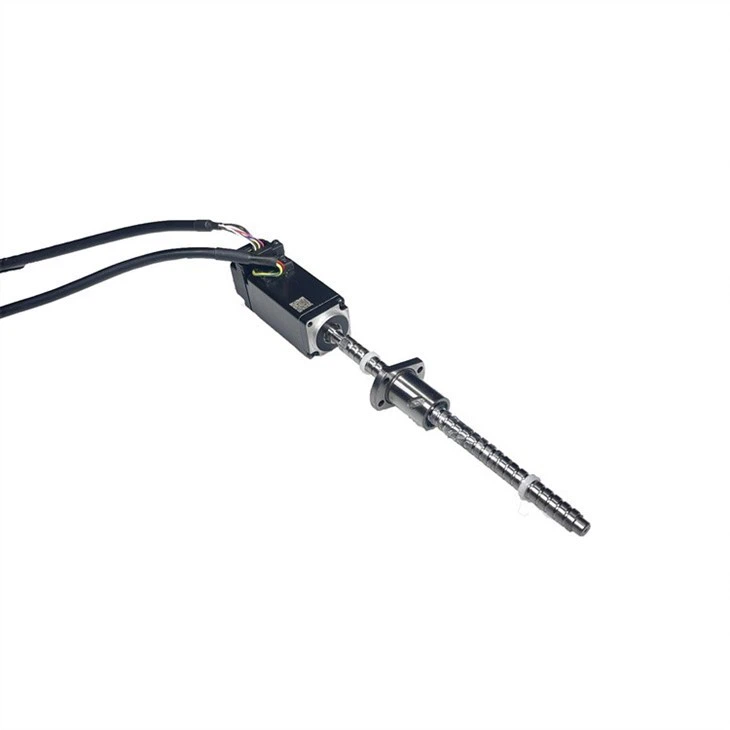
- Ball Screw Servo Motor: Ball Screw Servo Motors are designed to provide high - precision linear motion. They are commonly used in CNC machines, semiconductor manufacturing equipment, and robotics.
- Micro Electric Cylinder: Micro Electric Cylinders are compact and lightweight actuators that are suitable for applications where space is limited. They are often used in medical devices, consumer electronics, and small - scale automation systems.
Conclusion
The rated power of a Hollow Cup Motor is a critical parameter that determines its performance, efficiency, and suitability for various applications. As a supplier, we understand the importance of providing accurate and reliable information about the rated power of our motors to help our customers make informed decisions.
If you are in the market for Hollow Cup Motors or have any questions about their rated power or other technical specifications, we encourage you to contact us for a detailed discussion. Our team of experts is ready to assist you in selecting the right motor for your specific application and providing you with the best possible solutions.
References
- "Electric Motors and Drives: Fundamentals, Types, and Applications" by Austin Hughes and Bill Drury.
- "Motor Handbook" by Arnold Tustin.