

As a supplier of Servo Motor Rotors, I've witnessed firsthand the critical role that resolvers play in the operation of servo motors. In this blog, I'll delve into what a resolver of a servo motor rotor is, its functions, and its significance in the overall performance of servo motors.
What is a Resolver?
A resolver is a type of rotary electrical transformer used for measuring the angle of rotation. In the context of a servo motor rotor, it serves as a feedback device that provides information about the rotor's position, speed, and direction. Unlike other position sensors such as encoders, resolvers are more robust and can operate in harsh environments, making them ideal for industrial applications.

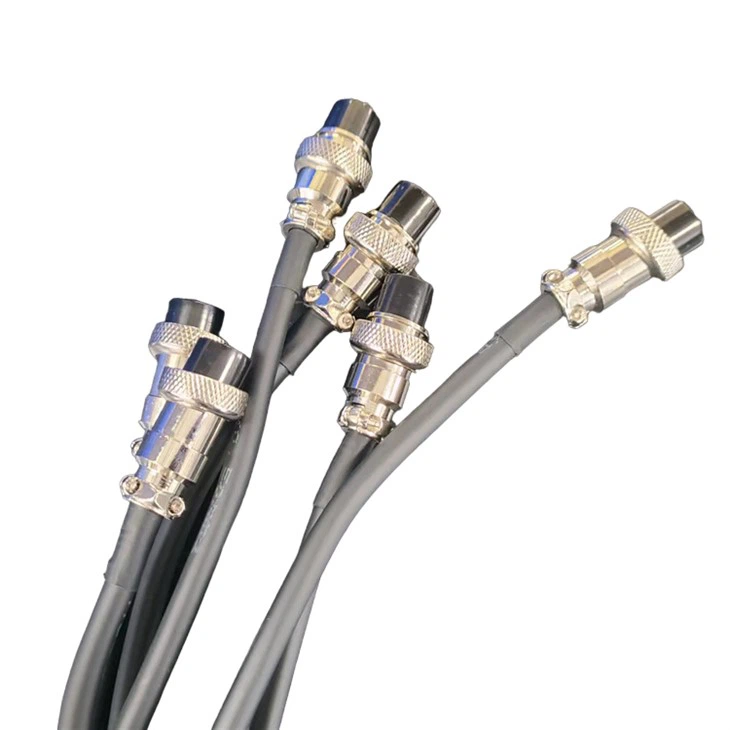
The basic structure of a resolver consists of a stator and a rotor. The stator contains two or more windings, typically referred to as the primary and secondary windings. The rotor, which is attached to the servo motor shaft, also has windings. When an alternating current (AC) is applied to the primary winding of the stator, it creates a magnetic field that induces a voltage in the secondary windings of the stator and the rotor windings. The magnitude and phase of the induced voltage depend on the angle of rotation of the rotor.
How Does a Resolver Work?
The operation of a resolver is based on the principle of electromagnetic induction. When an AC voltage is applied to the primary winding of the stator, it generates a magnetic field that rotates with the frequency of the applied voltage. As the rotor rotates, the magnetic field passing through the rotor windings changes, inducing a voltage in these windings.
The induced voltage in the rotor windings is proportional to the cosine and sine of the angle of rotation. By measuring the magnitude and phase of the induced voltage in the rotor windings, the resolver can determine the exact position of the rotor. This information is then sent to the servo drive, which uses it to control the motor's speed and position accurately.
Functions of a Resolver in a Servo Motor
- Position Feedback: One of the primary functions of a resolver is to provide accurate position feedback to the servo drive. By continuously monitoring the rotor's position, the resolver allows the servo drive to adjust the motor's output to maintain the desired position. This is crucial for applications that require high precision, such as robotics, CNC machines, and automated manufacturing systems.
- Speed Control: In addition to position feedback, the resolver also provides information about the rotor's speed. By measuring the rate of change of the rotor's position, the resolver can determine the motor's speed. This information is used by the servo drive to adjust the motor's torque and speed to meet the requirements of the application.
- Direction Detection: The resolver can also detect the direction of rotation of the rotor. By analyzing the phase relationship between the induced voltages in the rotor windings, the resolver can determine whether the rotor is rotating clockwise or counterclockwise. This information is essential for applications that require bidirectional operation, such as conveyor systems and robotic arms.
Advantages of Using a Resolver in a Servo Motor
- Robustness: Resolvers are more robust than other position sensors such as encoders. They can operate in harsh environments, including high temperatures, high humidity, and high vibration. This makes them ideal for industrial applications where reliability is crucial.
- High Accuracy: Resolvers can provide high-precision position and speed feedback. They are capable of measuring angles with an accuracy of up to a few arc minutes, making them suitable for applications that require high precision.
- Longevity: Resolvers have a long lifespan and require minimal maintenance. They do not have any moving parts other than the rotor, which reduces the risk of mechanical failure. This makes them a cost-effective solution for long-term use.
Applications of Servo Motor Rotors with Resolvers
Servo motor rotors with resolvers are used in a wide range of applications, including:
- Robotics: In robotics, servo motors with resolvers are used to control the movement of robotic arms and joints. The resolver provides accurate position and speed feedback, allowing the robot to perform precise movements.
- CNC Machines: In CNC machines, servo motors with resolvers are used to control the movement of the cutting tool. The resolver ensures that the cutting tool moves to the correct position with high precision, resulting in high-quality machining.
- Automated Manufacturing Systems: In automated manufacturing systems, servo motors with resolvers are used to control the movement of conveyor belts, robotic arms, and other equipment. The resolver provides accurate position and speed feedback, allowing the system to operate efficiently and effectively.
Related Products
As a supplier of Servo Motor Rotors, we also offer a range of related products, including Servo Motor Extension Cable, Servo Motor Plug, and Servo Motor Stator. These products are designed to work seamlessly with our servo motor rotors, providing a complete solution for your servo motor needs.
Conclusion
In conclusion, the resolver is a critical component of a servo motor rotor. It provides accurate position, speed, and direction feedback, allowing the servo drive to control the motor's output with high precision. Resolvers are robust, reliable, and long-lasting, making them ideal for industrial applications. As a supplier of Servo Motor Rotors, we are committed to providing high-quality products and excellent customer service. If you are interested in purchasing servo motor rotors or related products, please feel free to contact us for more information and to discuss your specific requirements.
References
- "Servo Motors and Industrial Control Theory" by W. Bolton
- "Motion Control Handbook" by Peter Nachtwey