

As a supplier of Linear DC Servo Motors, I often receive inquiries about the shock tolerance of these motors. Shock tolerance is a critical parameter that determines the motor's ability to withstand sudden impacts and vibrations without compromising its performance or longevity. In this blog post, I will delve into the concept of shock tolerance in Linear DC Servo Motors, exploring its significance, factors affecting it, and how it impacts the motor's application in various industries.
Understanding Shock Tolerance
Shock tolerance refers to the maximum amount of shock or impact that a Linear DC Servo Motor can endure without suffering permanent damage or experiencing a significant degradation in performance. Shock can occur due to various reasons, such as sudden stops, collisions, or vibrations during operation. These events can subject the motor to high levels of stress, which may cause mechanical damage to the motor's components, electrical failures, or even complete motor failure.
The shock tolerance of a Linear DC Servo Motor is typically specified in terms of acceleration (g - force), where 1 g is equivalent to the acceleration due to gravity (9.81 m/s²). For example, a motor with a shock tolerance of 100 g can withstand an impact equivalent to 100 times the force of gravity without damage.
Significance of Shock Tolerance
The shock tolerance of a Linear DC Servo Motor is of utmost importance in many industrial applications. In high - speed automation systems, for instance, motors may experience sudden stops or rapid changes in direction, which can generate significant shock forces. If the motor's shock tolerance is insufficient, these forces can lead to premature wear and tear, reduced accuracy, and ultimately, system failure.
In the aerospace and defense industries, where equipment is often subjected to extreme conditions, shock tolerance is a non - negotiable requirement. Motors used in unmanned aerial vehicles (UAVs), missiles, and other military equipment must be able to withstand high - intensity shocks and vibrations during takeoff, flight, and landing.
Similarly, in the automotive industry, Linear DC Servo Motors are used in various applications, such as electric power steering and active suspension systems. These motors need to be shock - resistant to ensure reliable operation in rough driving conditions and sudden maneuvers.
Factors Affecting Shock Tolerance
Several factors influence the shock tolerance of a Linear DC Servo Motor:
Mechanical Design
The mechanical design of the motor plays a crucial role in determining its shock tolerance. Motors with a robust and rigid structure are generally more shock - resistant. For example, motors with a well - designed housing and mounting system can better absorb and distribute shock forces, reducing the stress on the internal components. The use of high - quality materials, such as hardened steel and aluminum alloys, can also enhance the motor's mechanical strength and shock resistance.
Component Quality
The quality of the motor's internal components, such as the bearings, shafts, and windings, also affects its shock tolerance. High - quality bearings with proper lubrication can reduce friction and wear, allowing the motor to withstand higher shock forces. Similarly, well - insulated windings are less likely to be damaged by electrical arcing or short - circuits caused by shock.
Assembly and Manufacturing Processes
Precision assembly and manufacturing processes are essential for ensuring high shock tolerance. Tight tolerances in the assembly of the motor's components can prevent misalignment and reduce the risk of damage during shock events. Advanced manufacturing techniques, such as precision machining and laser welding, can also improve the motor's overall quality and shock resistance.
Testing and Certification
To ensure that our Linear DC Servo Motors meet the required shock tolerance standards, we conduct rigorous testing procedures. These tests simulate real - world shock conditions and measure the motor's response to different levels of impact.
One common test method is the drop test, where the motor is dropped from a specified height onto a hard surface. The acceleration during the impact is measured using accelerometers, and the motor's performance is evaluated before and after the test. Another test method is the shock table test, where the motor is mounted on a shock table that can generate controlled shock pulses of varying magnitudes and durations.
In addition to in - house testing, our motors are also certified by independent testing laboratories to meet international standards such as ISO 16750 - 3 for automotive applications and MIL - STD - 810 for military and aerospace applications.
Comparison with Other Types of Servo Motors
When comparing the shock tolerance of Linear DC Servo Motors with other types of servo motors, such as Absolute Servo Motor and Ball Screw Servo Motor, several factors need to be considered.
Absolute Servo Motors are known for their high precision and accuracy, but their shock tolerance may be limited due to the complex encoder systems they use. These encoders can be sensitive to shock and vibrations, which may affect the motor's position feedback and control accuracy.
Ball Screw Servo Motors, on the other hand, rely on a ball screw mechanism to convert rotary motion into linear motion. While ball screw mechanisms are generally robust, they can be susceptible to shock - induced wear and tear, especially if the shock forces are applied in the axial direction.
In contrast, Linear DC Servo Motors offer a good balance between shock tolerance, precision, and speed. Their direct - drive design eliminates the need for intermediate transmission components, reducing the risk of mechanical failure due to shock.
Applications and Case Studies
Linear DC Servo Motors with high shock tolerance are widely used in a variety of industries. Here are some examples:
Medical Equipment
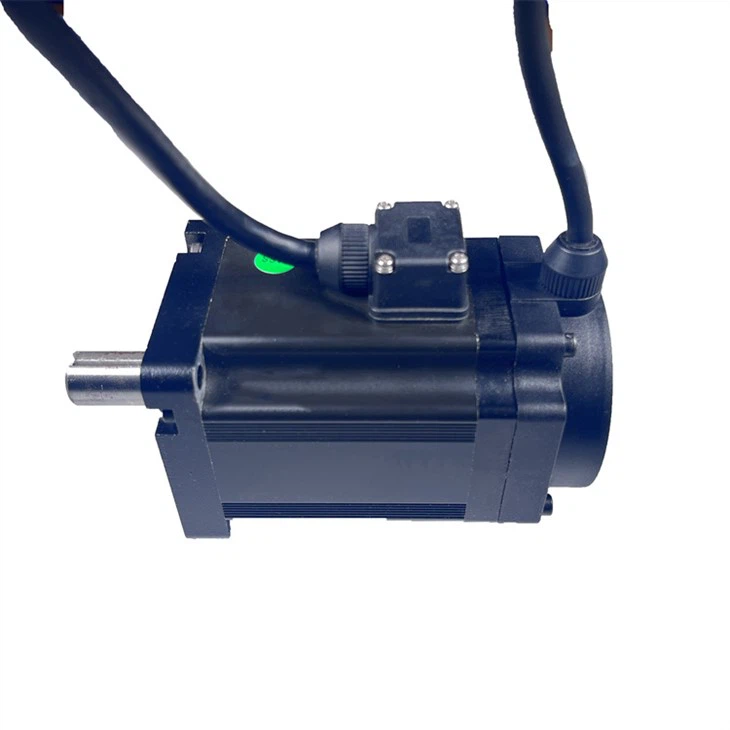
In medical imaging equipment, such as MRI and CT scanners, Linear DC Servo Motors are used to move the patient table and the imaging components. These motors need to be shock - resistant to ensure smooth and accurate movement, even in the presence of vibrations from the scanner's cooling systems or other external sources.

Robotics
Robots are often required to perform tasks in dynamic environments, where they may encounter sudden impacts or collisions. Linear DC Servo Motors with high shock tolerance are used in robotic arms and joints to ensure reliable operation and prevent damage to the robot's components.
Packaging Machinery
In packaging machinery, Linear DC Servo Motors are used to control the movement of conveyors, filling stations, and sealing mechanisms. These motors need to be able to withstand the shock and vibrations generated during the high - speed packaging process to ensure consistent product quality.
Conclusion
Shock tolerance is a critical factor to consider when selecting a Linear DC Servo Motor for your application. By understanding the concept of shock tolerance, its significance, and the factors that affect it, you can make an informed decision and choose a motor that can withstand the rigors of your operating environment.
As a leading supplier of Linear DC Servo Motor, we are committed to providing high - quality motors with excellent shock tolerance. Our motors are designed and manufactured using the latest technologies and undergo strict quality control procedures to ensure reliable performance.
If you are in the market for a Linear DC Servo Motor and have specific shock tolerance requirements, we invite you to contact us for a detailed discussion. Our team of experts will be happy to assist you in selecting the right motor for your application and provide you with all the necessary technical support.
References
- ISO 16750 - 3: Road vehicles - Environmental conditions and testing for electrical and electronic equipment - Part 3: Mechanical loads
- MIL - STD - 810: Environmental Engineering Considerations and Laboratory Tests