

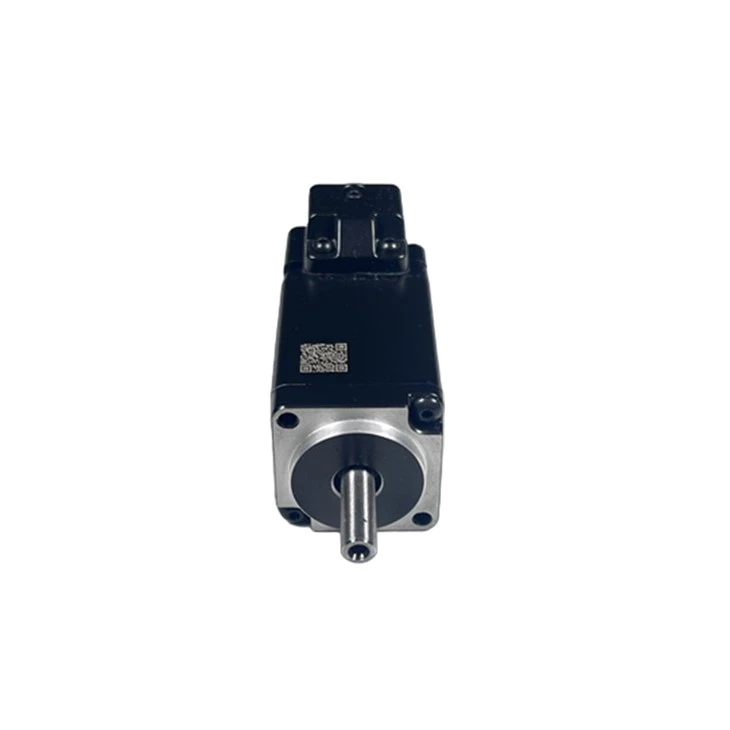
As a supplier of 40mm brushless motors, understanding how to accurately test the torque of these motors is crucial. Torque is a fundamental parameter that reflects the motor's ability to perform mechanical work, directly influencing its application scope and performance in various scenarios. In this blog, I'll share some practical methods for testing the torque of 40mm brushless motors based on my experience in the industry.
Understanding Torque in Brushless Motors
Before delving into the testing methods, it's essential to have a clear understanding of what torque means in the context of brushless motors. Torque is the rotational force that a motor can generate, measured in units such as Newton - meters (N·m). In a 40mm brushless motor, torque determines how much load the motor can drive at a given speed. Different applications require different levels of torque. For example, in robotic arms, high - torque motors are needed to lift and manipulate heavy objects, while in some precision instruments, lower - torque but more precise motors are sufficient.
Dynamometer Testing
One of the most common and accurate ways to test the torque of a 40mm brushless motor is by using a dynamometer. A dynamometer is a device that can measure the torque and power output of a motor under various operating conditions.
Setup
First, you need to securely mount the 40mm brushless motor to a stable base. Connect the motor shaft to the input shaft of the dynamometer. Make sure the connection is coaxial and rigid to ensure accurate torque transfer. The dynamometer should be calibrated according to the manufacturer's instructions before use to guarantee measurement accuracy.
Testing Process
Once the setup is complete, power on the motor and gradually increase the load on the dynamometer. As the load increases, the motor will adjust its output torque to maintain its speed. The dynamometer will record the corresponding torque values at different load levels. You can run the test at various speeds to obtain a torque - speed curve, which is a valuable reference for understanding the motor's performance characteristics.
Advantages and Disadvantages
The advantage of using a dynamometer is its high accuracy. It can provide detailed and reliable torque data under different operating conditions. However, dynamometers can be expensive, and the testing process may require some technical expertise.
Strain Gauge Method
Another method for torque testing is the strain gauge method. This method is based on the principle that when a shaft is subjected to torque, it will experience deformation, and the strain gauge can measure this deformation and convert it into a torque value.
Installation of Strain Gauges
Select a suitable location on the motor shaft to install the strain gauges. The location should be free from interference and have a relatively uniform stress distribution. Clean the surface of the shaft and carefully bond the strain gauges to it using a special adhesive. Connect the strain gauges to a strain gauge amplifier and a data acquisition system.
Testing Process
Power on the motor and let it run under different load conditions. The strain gauges will detect the deformation of the shaft caused by the torque and convert it into an electrical signal. The strain gauge amplifier will amplify this signal, and the data acquisition system will record and process the data to obtain the torque values.
Advantages and Disadvantages
The strain gauge method is relatively cost - effective and can be easily implemented in some simple testing environments. However, the installation of strain gauges requires high precision, and the measurement accuracy may be affected by factors such as temperature and humidity.

Comparison with Other Motors
When considering the torque testing of 40mm brushless motors, it's also interesting to compare them with other types of motors, such as Micro DC Servo Motor, 25mm servo motor, and 15mm servo motor.
Generally, 40mm brushless motors tend to have higher torque capabilities compared to 15mm and 25mm servo motors due to their larger size and more powerful internal structure. However, the specific torque performance also depends on the motor's design, winding configuration, and magnetic materials. Micro DC servo motors may have different torque - speed characteristics, and their torque control may be more precise in some applications.
Importance of Torque Testing for Product Quality
Accurate torque testing is of great significance for ensuring the quality of 40mm brushless motors. By testing the torque, we can identify any potential issues in the motor's design or manufacturing process. For example, if the measured torque is significantly lower than the specified value, it may indicate problems such as poor winding quality, weak magnetic field, or mechanical friction.
Moreover, torque testing data can also be used to optimize the motor's performance. We can adjust the motor's parameters, such as the number of windings and the magnetic field strength, based on the test results to improve its torque output and efficiency.
Conclusion
Testing the torque of 40mm brushless motors is a crucial step in ensuring their quality and performance. Whether using a dynamometer or the strain gauge method, each approach has its own advantages and disadvantages. As a supplier of 40mm brushless motors, we are committed to providing high - quality products, and accurate torque testing is an important part of our quality control process.
If you are interested in our 40mm brushless motors or have any questions about torque testing, please feel free to contact us for further discussions and potential procurement opportunities. We are always ready to offer you the best solutions and support.
References
- "Electric Motors and Drives: Fundamentals, Types, and Applications" by Austin Hughes and Bill Drury.
- "Motor Testing and Inspection Handbook" by Richard D. Durbin.