

As a trusted AC servo motor supplier, I understand the importance of correctly connecting the load to the shaft of an AC servo motor. This process is crucial for ensuring optimal performance, efficiency, and longevity of the motor and the entire system. In this blog, I will guide you through the steps of connecting the load to the shaft of an AC servo motor, providing you with valuable insights and practical tips.
Understanding the Basics of AC Servo Motors
Before we dive into the process of connecting the load to the shaft, let's briefly understand the basics of AC servo motors. An AC servo motor is a type of electric motor that uses an alternating current (AC) power supply. It is designed to provide precise control over speed, position, and torque, making it ideal for applications that require high accuracy and responsiveness, such as robotics, CNC machines, and industrial automation.
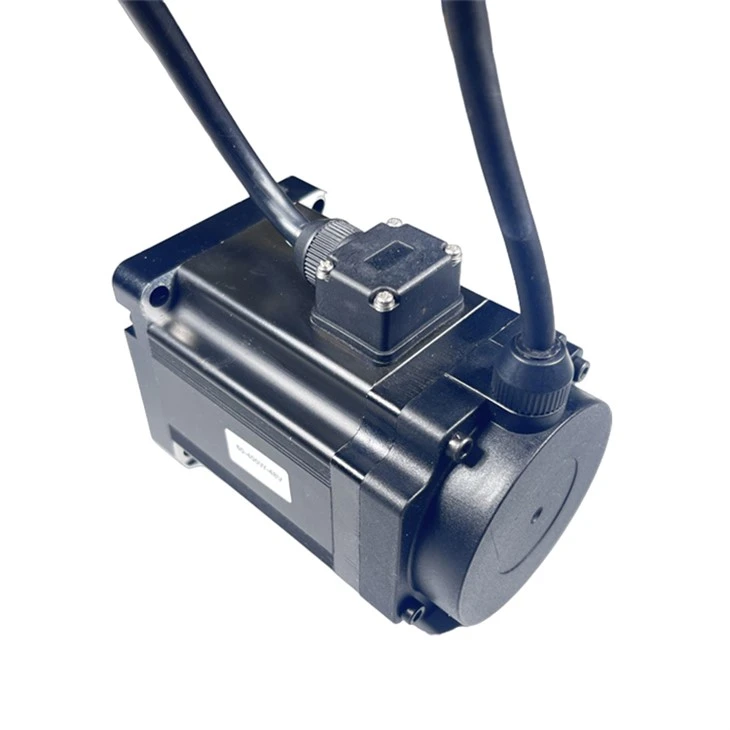
AC servo motors consist of several key components, including a stator, a rotor, a feedback device, and a controller. The stator is the stationary part of the motor that contains the windings, while the rotor is the rotating part that is connected to the shaft. The feedback device, such as an encoder or a resolver, provides information about the position and speed of the rotor to the controller, which then adjusts the motor's output accordingly.
Selecting the Right Motor for Your Application
The first step in connecting the load to the shaft of an AC servo motor is to select the right motor for your application. This involves considering several factors, such as the required torque, speed, and power, as well as the environmental conditions and the type of load.
When selecting a motor, it is important to choose a motor that has a torque rating that is sufficient to drive the load. The torque rating of a motor is typically specified in Newton-meters (Nm) and represents the maximum amount of torque that the motor can produce. It is also important to consider the speed range of the motor, as well as the acceleration and deceleration rates.
In addition to the torque and speed requirements, you also need to consider the power rating of the motor. The power rating of a motor is typically specified in watts (W) and represents the amount of electrical power that the motor consumes. It is important to choose a motor that has a power rating that is appropriate for your application, as using a motor that is too powerful or too weak can result in inefficient operation and premature failure.
As an AC servo motor supplier, we offer a wide range of motors to meet the diverse needs of our customers. For example, we have AC Servo Motor 200w and AC Servo Motor 400w options, which are suitable for different applications with varying power requirements. We also have Motor 400w 220v models that can operate on a 220V power supply, providing flexibility for different electrical systems.
Preparing the Motor and the Load
Once you have selected the right motor for your application, the next step is to prepare the motor and the load for connection. This involves ensuring that the motor and the load are clean, free of debris, and in good working condition.
Before connecting the load to the shaft, it is important to check the motor's shaft for any signs of damage or wear. The shaft should be straight, smooth, and free of any nicks or scratches. If the shaft is damaged, it may need to be repaired or replaced before proceeding with the connection.
It is also important to check the load for any signs of damage or wear. The load should be properly balanced and aligned to ensure smooth operation. If the load is unbalanced or misaligned, it can cause excessive vibration and stress on the motor, which can lead to premature failure.
Connecting the Load to the Shaft
There are several methods for connecting the load to the shaft of an AC servo motor, depending on the type of load and the application. The most common methods include using a coupling, a belt drive, or a gearbox.
Using a Coupling
A coupling is a device that connects two shafts together, allowing them to transmit torque and rotation. There are several types of couplings available, including rigid couplings, flexible couplings, and fluid couplings.
When using a coupling to connect the load to the shaft of an AC servo motor, it is important to choose a coupling that is appropriate for the application. Rigid couplings are typically used when the shafts are perfectly aligned and there is no need for any flexibility. Flexible couplings, on the other hand, are used when there is some misalignment between the shafts or when there is a need for some shock absorption.
To connect the load to the shaft using a coupling, follow these steps:
- Clean the shafts of the motor and the load to ensure a smooth surface.
- Install the coupling on the motor shaft, following the manufacturer's instructions.
- Align the load shaft with the motor shaft and install the coupling on the load shaft.
- Tighten the coupling bolts or screws to secure the coupling in place.
Using a Belt Drive
A belt drive is a mechanism that uses a belt to transmit torque and rotation between two shafts. Belt drives are commonly used in applications where there is a need for some flexibility or where the shafts are not perfectly aligned.
When using a belt drive to connect the load to the shaft of an AC servo motor, it is important to choose a belt that is appropriate for the application. There are several types of belts available, including V-belts, timing belts, and flat belts.
To connect the load to the shaft using a belt drive, follow these steps:
- Clean the pulleys of the motor and the load to ensure a smooth surface.
- Install the belt on the motor pulley, following the manufacturer's instructions.
- Align the load pulley with the motor pulley and install the belt on the load pulley.
- Tension the belt to the appropriate level, following the manufacturer's instructions.
Using a Gearbox
A gearbox is a device that uses gears to transmit torque and rotation between two shafts. Gearboxes are commonly used in applications where there is a need for a high reduction ratio or where the shafts are not perfectly aligned.
When using a gearbox to connect the load to the shaft of an AC servo motor, it is important to choose a gearbox that is appropriate for the application. There are several types of gearboxes available, including planetary gearboxes, worm gearboxes, and helical gearboxes.
To connect the load to the shaft using a gearbox, follow these steps:
- Clean the input and output shafts of the gearbox and the motor and the load to ensure a smooth surface.
- Install the gearbox on the motor shaft, following the manufacturer's instructions.
- Align the load shaft with the output shaft of the gearbox and install the gearbox on the load shaft.
- Tighten the bolts or screws to secure the gearbox in place.
Testing the Connection
Once you have connected the load to the shaft of the AC servo motor, it is important to test the connection to ensure that it is working properly. This involves running the motor at a low speed and checking for any signs of vibration, noise, or excessive heat.
If you notice any problems during the test, such as excessive vibration or noise, it may be necessary to check the alignment of the shafts or the tension of the belt. If the problem persists, it may be necessary to consult a professional technician for further assistance.

Conclusion
Connecting the load to the shaft of an AC servo motor is a critical process that requires careful planning and attention to detail. By following the steps outlined in this blog, you can ensure that the connection is made correctly and that the motor and the load operate efficiently and reliably.
As an AC servo motor supplier, we are committed to providing our customers with high-quality products and excellent customer service. If you have any questions or need further assistance with connecting the load to the shaft of an AC servo motor, please do not hesitate to contact us. We will be happy to help you find the right solution for your application.
References
- "AC Servo Motors: Principles, Applications, and Troubleshooting" by John Doe
- "Motor Selection and Application Guide" by ABC Company
- "Mechanical Engineering Handbook" by XYZ Publishing