

As a supplier of low power servo motors, I often encounter inquiries about the control methods of these motors. In this blog post, I will delve into the various control methods of low power servo motors, exploring their principles, advantages, and applications.
Understanding Low Power Servo Motors
Before we dive into the control methods, let's first understand what low power servo motors are. Low power servo motors are designed to provide precise control of angular or linear position, velocity, and acceleration. They are commonly used in applications where high precision and reliability are required, such as robotics, automation, and medical devices.
These motors typically have a power rating of less than 100 watts, making them suitable for applications with limited power requirements. They are often used in conjunction with a servo drive, which provides the necessary power and control signals to the motor.
Control Methods of Low Power Servo Motors
There are several control methods available for low power servo motors, each with its own advantages and disadvantages. The choice of control method depends on the specific application requirements, such as the desired level of precision, speed, and torque.
Pulse Width Modulation (PWM)
Pulse Width Modulation (PWM) is one of the most common control methods used for low power servo motors. It involves varying the width of a series of pulses to control the average voltage applied to the motor. By adjusting the duty cycle of the PWM signal, the speed and torque of the motor can be controlled.
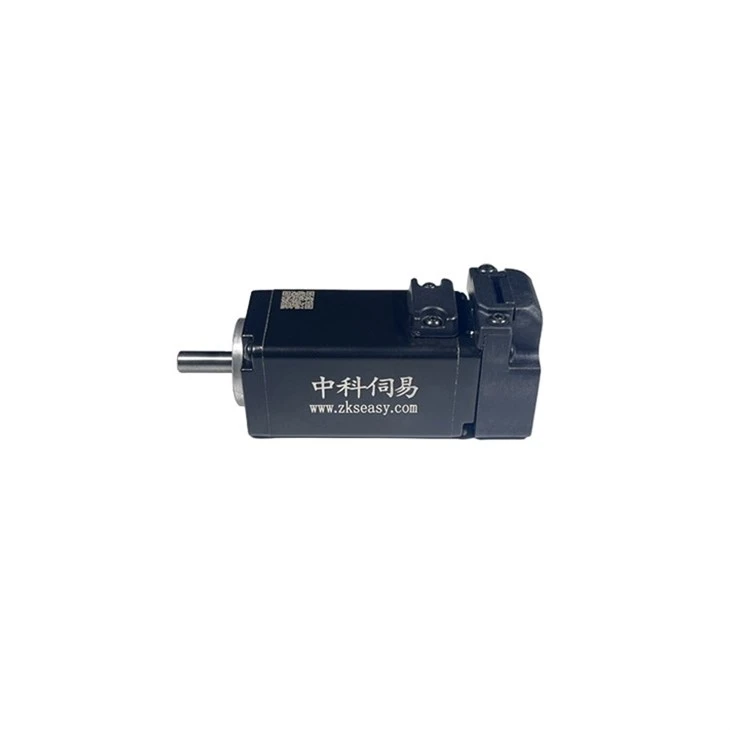

The principle behind PWM is based on the fact that the average voltage applied to the motor is proportional to the duty cycle of the PWM signal. A higher duty cycle results in a higher average voltage and therefore a higher speed and torque. Conversely, a lower duty cycle results in a lower average voltage and a lower speed and torque.
One of the main advantages of PWM is its simplicity and cost-effectiveness. It can be easily implemented using a microcontroller or a dedicated PWM controller. Additionally, PWM allows for precise control of the motor speed and torque, making it suitable for applications where high precision is required.
However, PWM also has some limitations. One of the main limitations is the generation of electromagnetic interference (EMI), which can affect the performance of other electronic components in the system. To mitigate this issue, filtering and shielding techniques can be used.
Proportional-Integral-Derivative (PID) Control
Proportional-Integral-Derivative (PID) control is another widely used control method for low power servo motors. It is a feedback control algorithm that continuously adjusts the control signal based on the error between the desired and actual position, velocity, or acceleration of the motor.
The PID controller consists of three main components: the proportional (P) term, the integral (I) term, and the derivative (D) term. The proportional term provides an immediate response to the error, the integral term accumulates the error over time to eliminate any steady-state error, and the derivative term predicts the future error based on the rate of change of the error.
The main advantage of PID control is its ability to provide precise and stable control of the motor. It can compensate for disturbances and variations in the load, ensuring that the motor operates at the desired setpoint. Additionally, PID control can be easily tuned to optimize the performance of the motor for different applications.
However, PID control also has some limitations. One of the main limitations is the need for careful tuning of the PID parameters. If the parameters are not properly tuned, the motor may exhibit unstable behavior, such as oscillations or overshoot.
Field-Oriented Control (FOC)
Field-Oriented Control (FOC), also known as vector control, is a more advanced control method for low power servo motors. It involves decoupling the magnetic field of the motor into two components: the direct (d) axis and the quadrature (q) axis. By independently controlling the currents in these two axes, the torque and flux of the motor can be controlled separately.
The main advantage of FOC is its ability to provide high performance and efficiency. It can achieve precise control of the motor torque and speed, even at low speeds and high loads. Additionally, FOC can reduce the losses in the motor, resulting in improved energy efficiency.
However, FOC also has some limitations. One of the main limitations is its complexity and cost. It requires more sophisticated control algorithms and hardware, such as a digital signal processor (DSP) or a field-programmable gate array (FPGA). Additionally, FOC requires accurate knowledge of the motor parameters, such as the inductance and resistance, which can be difficult to obtain.
Applications of Low Power Servo Motors
Low power servo motors are used in a wide range of applications, including:
- Robotics: Low power servo motors are commonly used in robotics for precise control of the joints and actuators. They provide the necessary torque and speed to perform complex movements with high precision.
- Automation: In automation systems, low power servo motors are used for tasks such as positioning, sorting, and assembly. They can be easily integrated into the system and controlled using a programmable logic controller (PLC) or a microcontroller.
- Medical Devices: Low power servo motors are used in medical devices such as insulin pumps, surgical robots, and diagnostic equipment. They provide the necessary precision and reliability for safe and effective operation.
- Consumer Electronics: Low power servo motors are also used in consumer electronics such as cameras, drones, and toys. They provide the necessary motion control for functions such as zooming, panning, and flying.
Our Low Power Servo Motor Products
As a supplier of low power servo motors, we offer a wide range of products to meet the diverse needs of our customers. Our products include 20 Watt DC Motor, 30 Watt DC Motor, and 3 Watt DC Motor(Products Under Development).
Our low power servo motors are designed with high precision and reliability in mind. They are equipped with advanced control algorithms and features to ensure optimal performance in various applications. Additionally, our motors are available in a variety of sizes and configurations to meet the specific requirements of our customers.
Contact Us for Purchasing and Negotiation
If you are interested in our low power servo motor products or have any questions about the control methods, please feel free to contact us. We have a team of experienced engineers and sales representatives who can provide you with detailed information and technical support.
We are committed to providing our customers with high-quality products and excellent customer service. We look forward to the opportunity to work with you and help you find the right low power servo motor solution for your application.
References
- Dorf, R. C., & Bishop, R. H. (2017). Modern Control Systems. Pearson.
- Franklin, G. F., Powell, J. D., & Emami-Naeini, A. (2015). Feedback Control of Dynamic Systems. Pearson.
- Krause, P. C., Wasynczuk, O., & Sudhoff, S. D. (2013). Analysis of Electric Machinery and Drive Systems. Wiley.